Feature on Dr Tej Singh and His Contributions to Marine Science
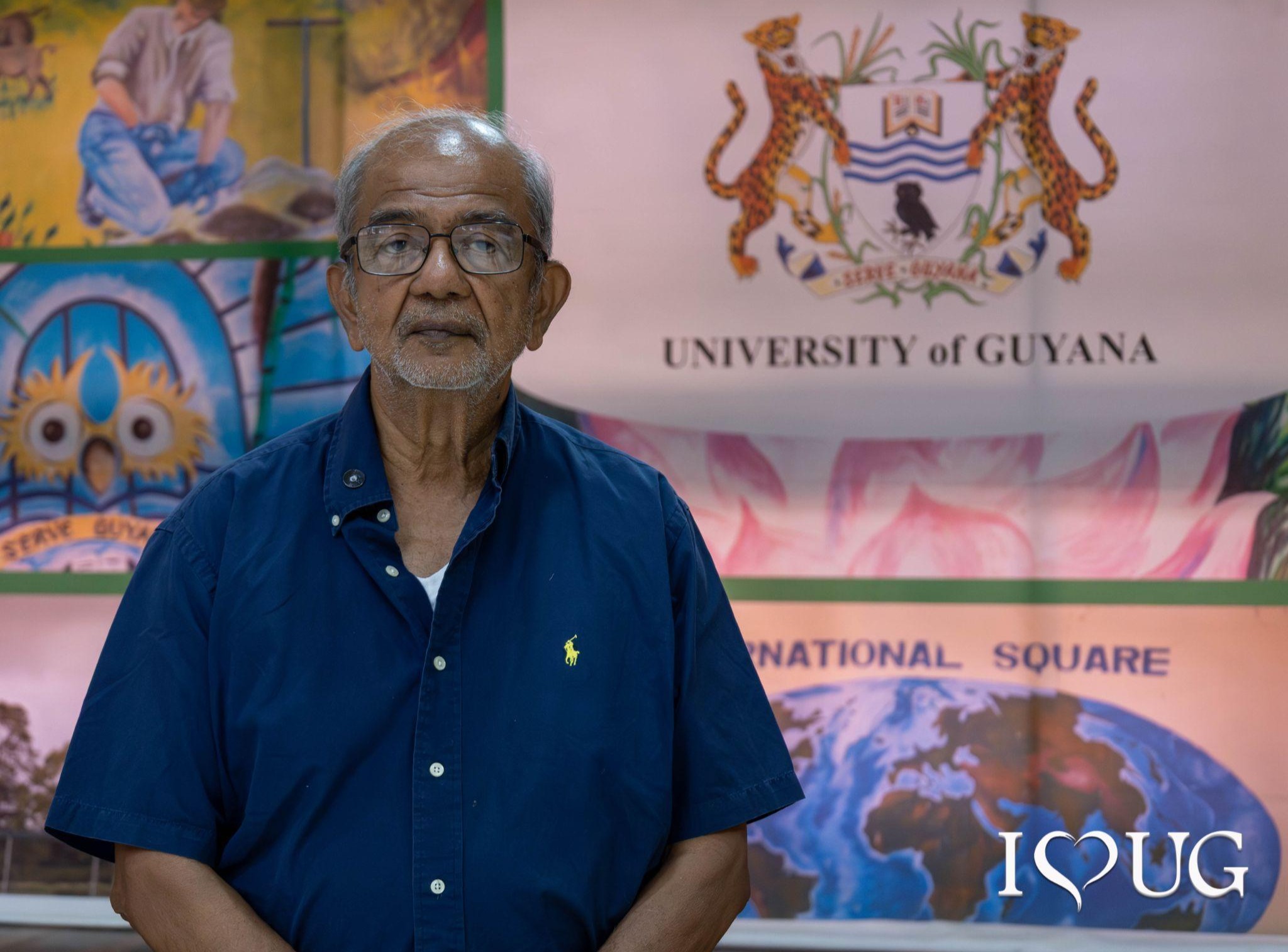
Monday, October 12, 2026 - 09:51Dr. Tej Singh at the networking lunch held in his honour at the University of Guyana on Thursday, September 17, 2026.
Long before Dr Tej Singh became a fish biologist, he was just a young boy fascinated by the aquatic animals swimming in the trenches of Guyana. His siblings still remember him as a five-year-old catching fish from both sides of those trenches and keeping them in aquariums at home. That childhood fascination eventually grew into a lifelong scientific pursuit that took him to the Department of Biology at the University of Guyana (UG), where he became Head of Department and later Dean of the Faculty of Natural Sciences.
Decades after his tenure at the University, Dr Singh returned to UG on Thursday, September 17, for a networking lunch hosted jointly by the Institute for Marine and Riverine Ecologies and Economies (IMAREE) and the Faculty of Natural Sciences (FNS), in recognition of his contribution to the University and its development.
At the event, Dr Singh, informed the attendees that his fascination with fishes continued well beyond his departure from UG. “I’m basically a fish biologist,” he said, affirming his continued interest, and then explaining that this interest continues to span“every aspect of fish, from consuming fish to rearing fish and to doing anything with the biology of fish,” he added.
It was this enduring interest that helped shape one of the significant aspects of his legacy at UG. During his tenure as Dean of the Faculty of Natural Sciences, Dr Singh envisioned the expansion and development of marine sciences at the university. In pursuit of this vision, he initiated efforts to establish an Institute of Marine Sciences and secured a UNESCO consultancy to explore the possibilities.
It was through this consultancy that he became involved in a study led by Jamaican marine scientist, Dr Ivan Goodbody, which examined Guyana's marine and aquatic resources. The report from this study continues to be a body of work held in high regard by Dr Singh.
Throughout his consultancy and subsequent work in the field, the proposed institute remained a priority for Dr Singh. He even identified a building along Liliendaal Public Road, Greater Georgetown, which he envisioned as a potential home for the institution. Although he eventually left Guyana before the vision was realised, he continued to follow the University’s progress towards establishing the institute.
That early vision for the University has since found renewed expression through IMAREE, which is advancing research on Guyana’s marine and riverine environments. “I’m very proud,” Dr Singh said, noting his particular satisfaction that one of his former students, Phillip DaSilva, is now part of the initiative. “They have a good vision. They’re enthusiastic,” he said.
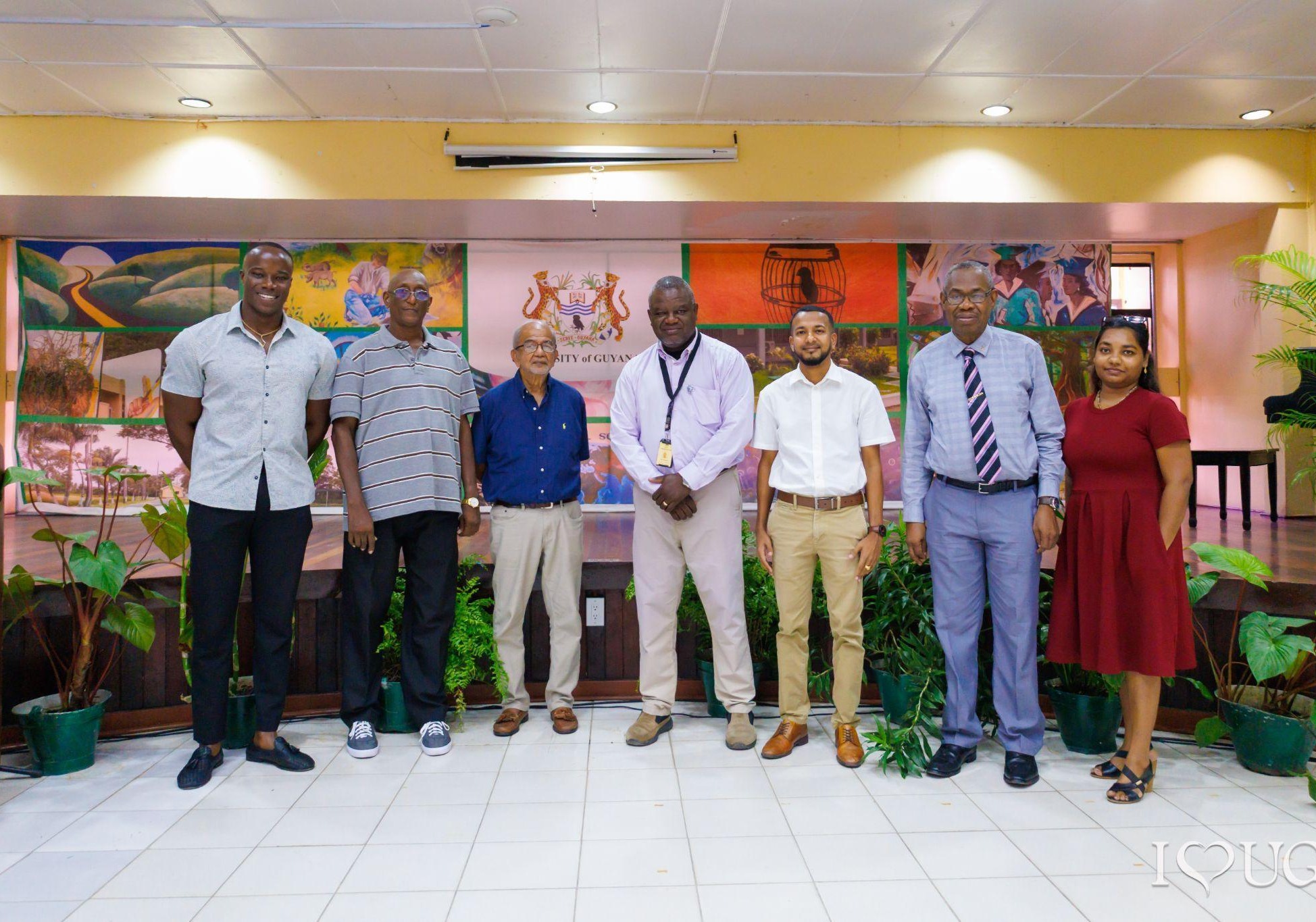
Dr Singh with members of the IMAREE - from left to right, Troy Broomes, Coordinator, Education and Training, Phillip DaSilva, Deputy Director, Dr Tej Singh, Calvin Bernard, Director, Dr Mark Ram, Coordinator, Research, Innovation and Services, Dr Ivor English, Senior Lecturer, Rajshrie Balram, Administrative Officer
Dr Singh believes Guyana’s aquatic environment, which spans from its mudflats and mangroves to aquaculture, fisheries and the wider marine and riverine ecosystem, present enormous opportunities for research and development. “There’s lots of work to do here,” he said.
Dr Singh is already looking toward contributing to this work. Having followed developments in Guyana’s fisheries from abroad, he became particularly interested in the growing exploitation of the Peacock Bass, locally called Lukanani fish. “Nobody’s done the biology of the Lukanani,” he observed, expressing his intention to pursue a collaborative research project with young scientists at UG, drawing on his expertise in reproductive biology and population dynamics.
For Dr Singh, the opportunity to work with a new generation of scientists is one of the most rewarding aspects of returning to a university environment. “I enjoy working with young people. Anytime I went on a campus, those were the happiest days of my life,” he said.
His return also gave him an opportunity to reflect on how dramatically UG has changed since he first joined the Department of Biology in the 1970s.
He remembers a University where staff worked with limited resources, research materials could take months to arrive, and even basic chemicals and equipment were sometimes difficult to obtain. Yet, he said, the institution was driven by people with vision and determination.
Today, he sees a very different University. “The quality of the staff has improved remarkably,” Dr Singh said.“Now, these guys [staff] are super qualified. They’re enthusiastic. They are doing wonderful work,” he continued.
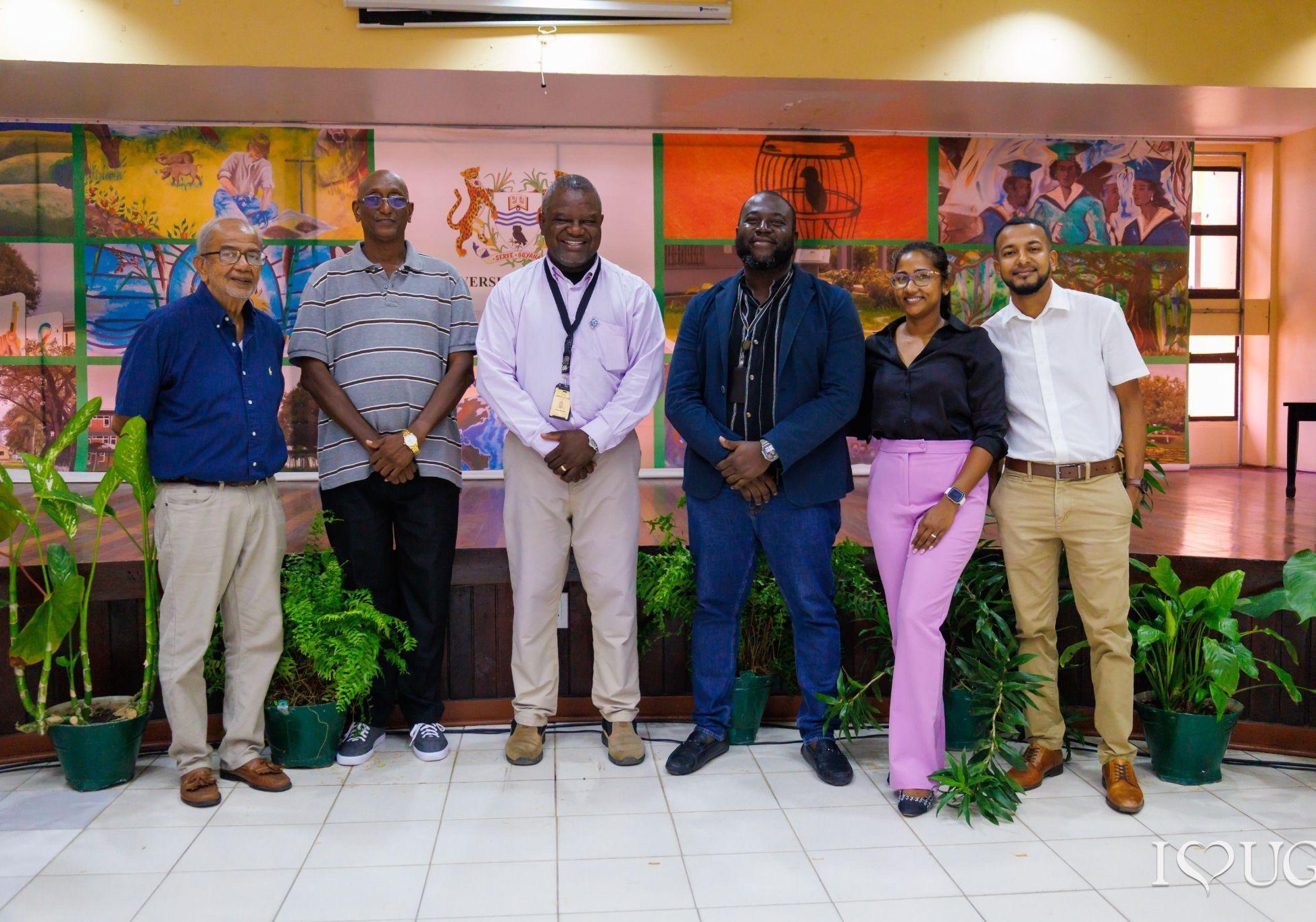
Generations of aquatic biologists at UG in order which started with Dr Singh - from left to right, Dr Tej Singh, Phillip DaSilva, Calvin Bernard, Elford Liverpool, Dr Devya Hemraj-Naraine, Dr Mark Ram
He is particularly encouraged by the achievements of former students who have gone on to become academics, researchers and professionals in Guyana and abroad. “I feel very proud when I see my students teaching here,” he said.
For the young scientists now at UG, Dr Singh sees opportunities he could scarcely have imagined during his own academic career. “I envy this new generation. They are young, they are bright, they have the resources, they have the energy, and they are connected,” he said.
The internet, he noted, has transformed access to scientific knowledge. Whereas researchers once depended on libraries and international institutions to photocopy and mail research papers, scientists today can access vast amounts of information almost instantly.
Dr Singh believes Guyana’s natural wealth makes this generation particularly well positioned to advance scientific research. “Guyana is rich in so many resources, so many avenues,” he said.
From fish biology and aquaculture to mangroves, mudflats and marine research, he sees an abundance of questions waiting to be answered, and opportunities for young Guyanese scientists to answer them.
For a man whose scientific pursuits began with catching fish in a trench as a child, the return to UG represents more than a visit. For Dr Singh, it is a chance to see a decades-old vision taking shape, to reconnect with the institution that helped shape his career and, perhaps most importantly, to help inspire those who will carry the work forward.