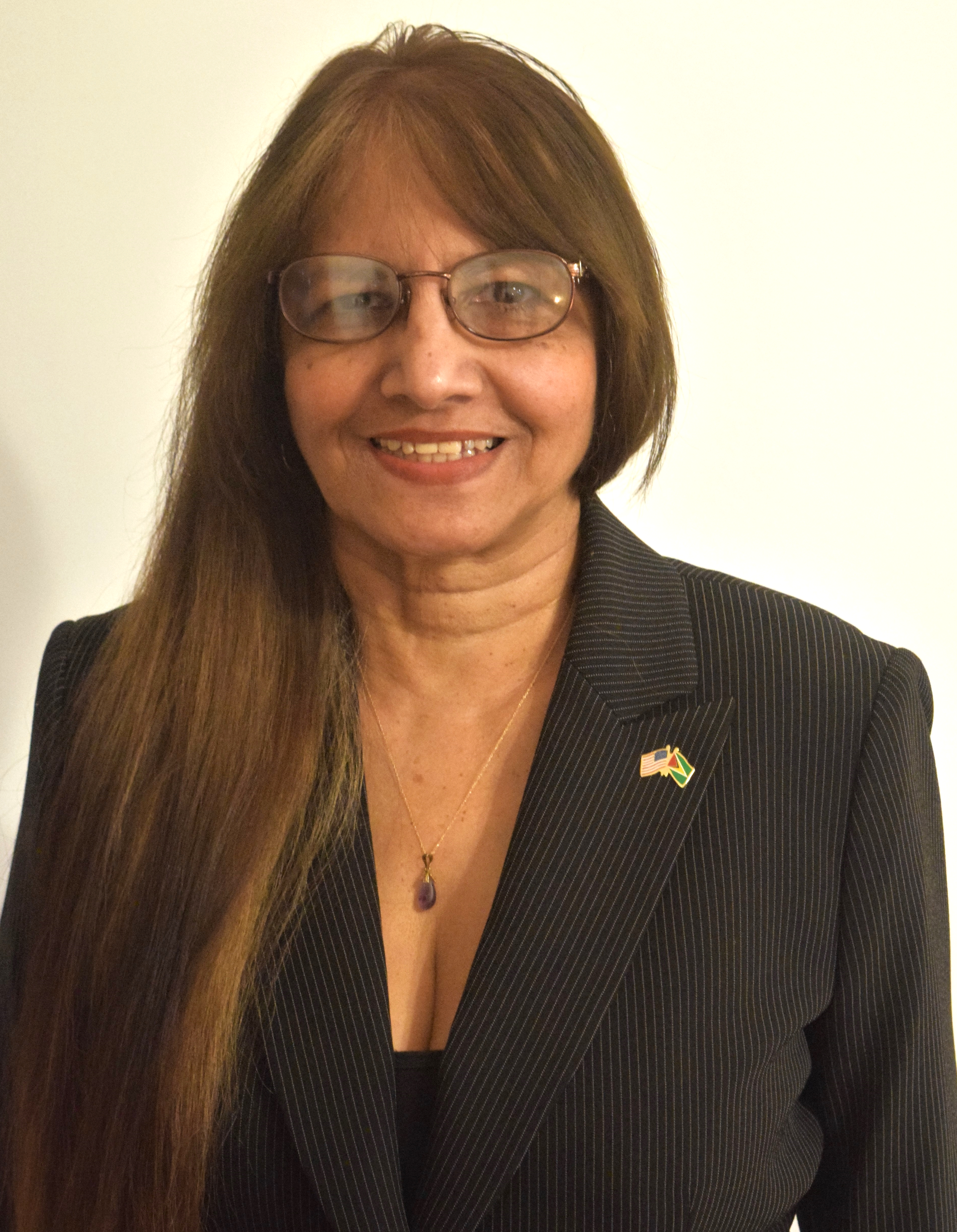
Beyond the Prize: Dr. Seeta Terry Shah Roath’s Journey Through Communication, Culture and Storytelling
Tuesday, September 22, 2026 - 13:19Dr Seeta Terry Shah Roath, lecturer within the Centre for Communication Studies at the University of Guyana, media practitioner, writer and recipient of the 2025 Guyana Prize for Literature in the Drama category.
Dr Seeta Terry Shah Roath, lecturer within the Centre for Communication Studies (CCS) and the Faculty of Education and the Humanities (FEH) at the University of Guyana (UG), alumna, media practitioner and writer, is being recognised for her literary work following her receipt of the 2025 Guyana Prize for Literature in the Drama category for her play KISNA: From Whence We Came—British India to British Guiana.
For Dr Shah Roath, this award represents only one milestone in a career spanning more than four decades across communication, education, broadcasting, research, theatre and creative writing. Her journey has taken her from the University of Guyana, where she graduated as the University's best graduating student with a Diploma in Communication, to a career that has combined professional practice, teaching, cultural preservation and storytelling.
KISNA is a full-length hybrid play suitable for both stage and screen and explores the historical, geographical and human dimensions of the Indian indentureship system from British India to British Guiana.
According to Dr Roath, KISNA is the product of years of research and engagement with the subject. Her interest in Indian indentureship dates back to 1987, when she produced her first Documentary Film on the subject, From the Grasses of Rice and Cane. Since then, she has produced heritage presentations in Guyana, Trinidad and Suriname, published articles and poems, written and produced dance dramas, directed stage productions and written a novel exploring variations of the indentureship experience.
The idea for KISNA was developed while she was completing a nine-month screenwriting course at Michigan State University. Her weekly assignments centred on the adventures of Kisna, a child who survives a theatre fire and later becomes caught up in the indentureship system. “I had to produce a capstone project for the course end and thought putting all the acts together into a hybrid play, both screen and stage, would be the best use of my time and energies,” Dr Shah Roath explained.
Following the completion of the play, strong peer reviews encouraged her to develop the work further. “Having completed the full hybrid play, I received such great peer reviews that I decided to publish it as a book,” she said.
The publication was subsequently entered into the Guyana Prize for Literature, where it received the Drama award. KISNA extends beyond the writing of the play. Research for the production drew on governors' reports, newspapers, court records, archival material, oral histories and interviews with descendants of indentured labourers.
One aspect of that research that particularly stayed with Dr Shah Roath was the silence surrounding the experiences of some families. “One discovery I made during the interviews with descendants was that their parents, grandparents, and great grandparents never spoke about the memories/experiences in India regardless of how often they were questioned,” she said.
She also found that the journey itself created lasting bonds among those who travelled to British Guiana. “One common experience was on the ship’s journey, that they gained ship brothers and sisters, and in some cases mothers and fathers in the case of orphans,” she explained, noting that some of these “ship families” continued across generations.
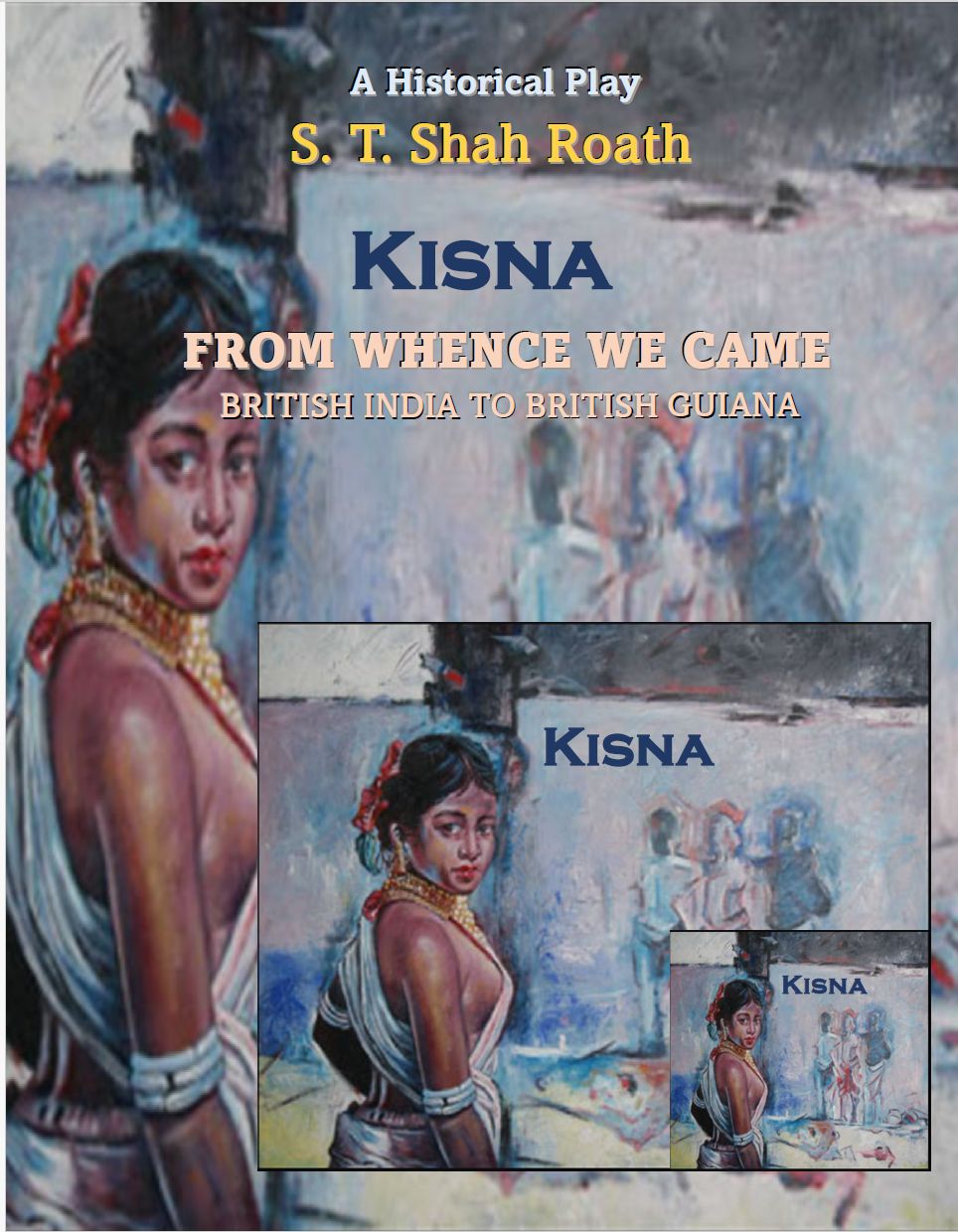
The cover of Dr Seeta Terry Shah Roath’s award-winning play, KISNA: From Whence We Came – British India to British Guiana.
For Dr Shah Roath, understanding such experiences is important to understanding Guyana's wider cultural identity. “I think that all Guyanese need to be able to know their heritage and be able to distinguish what is truly Guyanese,” she said. “They need to understand and appreciate our folk cultures, our folk tales, our traditions. They need to understand our colonial history and appreciate our retention patterns that came from our fore parents,” she added.
Her commitment to documenting and communicating Guyana's heritage is reflected throughout her professional journey. Dr Shah Roath graduated from the University of Guyana in 1986 as the University's best graduating student with a Diploma in Communication. She subsequently worked as a Media Production Assistant at the Centre of Communication from 1986 to 1989, where she produced UG's radio programme “University on the Air " and supported public relations activities within the Faculty of Social Sciences.
She also supervised student research projects and assisted with curriculum development for the proposed first degree programme in Communication Studies.
After completing her degree in Communication, she returned to UG as a part-time lecturer, teaching Advanced Television Broadcasting and practical components of Development Support Communication.
Her professional experience would later span more than three decades in the multimedia environment, encompassing content creation, training, studio and technical operations, television transmission systems, and network management. She was the founder, architect, and director of the Guyana Learning Channel Trust’s countrywide satellite educational television broadcast network, built to reach all regions of Guyana. She also coordinated the building of the University of Guyana’s terrestrial radio station and studio.
She has also taught television broadcast production and programming at UG and film production at the National School of Theatre Arts and Drama. As a consultant, she was involved in the establishment of Ignite Television, where she mentored editorial and production staff and developed the station's Operations Manual.
Alongside her work in communication and education, Dr Shah Roath has maintained a longstanding connection to the arts. Growing up in Kitty, Georgetown, she was exposed to a range of Guyana's cultural traditions, including Maypole dancing, Nativity pageants, masquerades, Ramlilas, Chautal singing, kite making, Phagwah celebrations, sari pageants, classical ballet and ballroom dancing.
These experiences contributed to her development as a multicultural theatre practitioner. She has served as technical and artistic director for Guyana's participation in Carifesta and Inter-Guiana Cultural Festivals and has directed the dance theatre programme Nrityageet for more than 40 years.
Her creative writing portfolio includes the 2023 novel The Return of Latchmini, the short story collection Under the Calabash Tree and KISNA. She has also worked as an international journalist for The Washington Times and The Washington Diplomat, producing feature publications on Guyana and the wider Caribbean.
For Dr Shah Roath, the ability to move between research, teaching and creative work is driven largely by passion. “If I am not inspired to work on something, I am most likely to leave it back and it remains undone,” she said. “I have to be passionate about a topic or task so that I become immersed in the research and execution,” she added.
That approach is reflected in her creative process, which she says can take weeks, months or years depending on the project. At the same time, she finds that some work can emerge quickly when she has the right environment. “I need tranquility, just the sounds of nature, no traffic, no Internet interference, and the ideas and visual images that are transformed into writing just flow,” she said.
The 2025 Guyana Prize for Literature has brought renewed attention to Dr Shah Roath's creative work, but her contribution extends well beyond the recognition of a single publication. From her early work in communication and broadcasting to her teaching, research, theatre practice and literary writing, her career has remained closely connected to documenting, interpreting and communicating aspects of Guyana's history and cultural heritage.
Her journey reflects the many ways in which communication, scholarship and creative expression can intersect. Through her work at the University of Guyana and across Guyana's wider cultural and media landscape, Dr Shah Roath continues to contribute to the preservation and sharing of stories that help shape an understanding of the country's past and present. The University of Guyana congratulates Dr Seeta Terry Shah Roath on receiving the 2025 Guyana Prize for Literature in the Drama category and recognises her continued contributions to communication, education, research, the arts and Guyana's literary and cultural heritage.